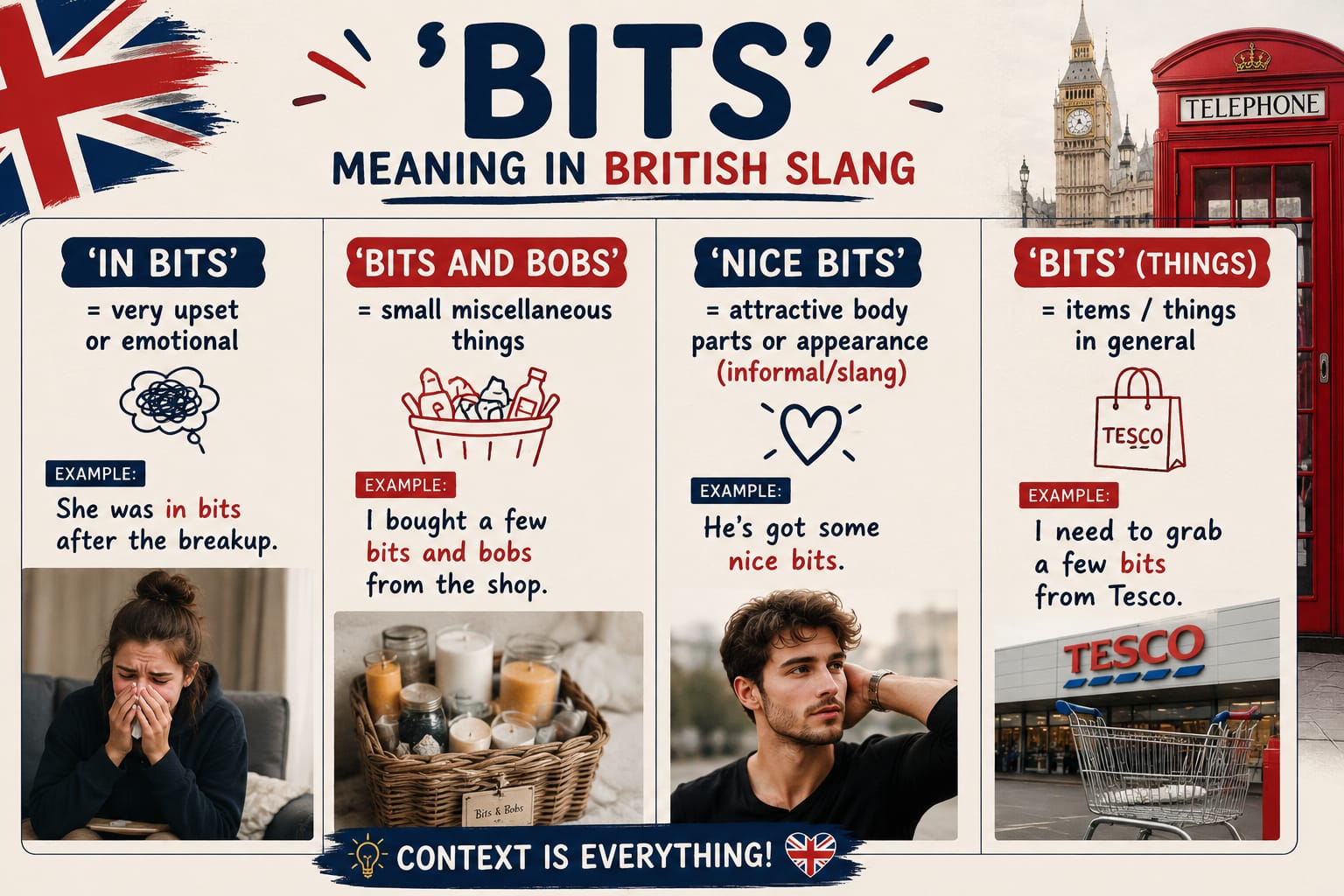
In British English, slang can be confusing because the same word often carries multiple meanings depending on context. One such example is the phrase “bits meaning British slang,” which people frequently search for when they hear the word in conversation, films, or TV shows. The term “bits” is used informally across different situations in the UK, and its meaning can range from harmless everyday language to mildly vulgar slang depending on how it is used.
Understanding “bits” in British slang is important because context completely changes its meaning. In some cases, it refers to small pieces or miscellaneous items, while in others it can be a euphemism for private body parts. This article breaks down all the common interpretations, real usage examples, and cultural context so you can understand exactly what someone means when they use the word “bits” in British English.
Understanding “Bits” in British Slang
Everyday meaning: small pieces or items
One of the most common uses of “bits” in British English is completely harmless. It simply refers to small pieces, parts, or items. You will often hear phrases like “bits and bobs,” which means various small things or miscellaneous objects. In this context, “bits” is not slang in a negative sense but rather informal everyday vocabulary.
For example, someone might say, “I’ve got a few bits to sort out today,” meaning they have small tasks or errands to complete. Similarly, “I picked up a few bits from the shop” refers to buying a few small items. This usage is extremely common across the UK and is widely understood in both casual and semi-formal conversation.
Informal usage in daily conversation
Beyond physical objects, “bits” is also used to describe minor tasks or scattered responsibilities. British speakers often prefer shorter, relaxed expressions in daily speech, and “bits” fits naturally into that pattern. It gives a sense of something small, unimportant, or casual.
For instance, “I’m just doing a few bits around the house” might include cleaning, organizing, or small repairs. In this sense, the word helps simplify communication and reflects the British tendency to use understated, informal phrasing in everyday life.
“Bits” as British Slang for Body Parts
Euphemism in informal speech
When people search “bits meaning British slang,” they are often referring to its more sensitive usage. In some informal contexts, “bits” can be a euphemism for private body parts. This is not formal language and is generally used in casual, humorous, or slightly crude conversations.
For example, someone might say “cover your bits” when referring to getting dressed or protecting modesty. It is intentionally vague and avoids directly naming specific anatomy, which makes it a softer or more socially acceptable expression in some settings.
Context matters more than the word itself
The meaning of “bits” in this context depends heavily on who is speaking and in what situation. Among friends, it might be used jokingly without serious intent. However, in formal or professional environments, this usage would be considered inappropriate.
This is why understanding tone is important in British slang. The same word can sound completely innocent or mildly vulgar depending on delivery. In British culture, indirect language is common, and “bits” often serves as a flexible euphemism rather than a fixed anatomical reference.
“Bits and Bobs” and Related Expressions
Meaning of “bits and bobs”
A very common phrase in British English is “bits and bobs,” which is closely related to the word “bits.” It refers to various small items, random objects, or minor things that do not belong to a specific category. This phrase is widely used in both spoken and written informal English.
For example, “I’ve got a box full of bits and bobs in the garage” means a collection of miscellaneous items. It is one of those classic British expressions that adds personality to everyday language while keeping communication simple and flexible.
Other related slang variations
British English often extends “bits” into other informal expressions. Depending on region and social group, people may use it in slightly different ways, but the general idea remains the same—something small, informal, or non-specific.
You might also hear expressions like “little bits” or “a few bits,” both of which refer to minor things or tasks. These variations show how flexible the word is in everyday British communication, making it a useful but context-dependent term.
Cultural Context of “Bits” in the UK
Why British slang uses vague terms
British slang often relies on understatement and indirect language. Instead of being overly explicit, speakers prefer softer or more flexible words. “Bits” fits this pattern perfectly because it can mean different things without sounding too serious or direct.
This cultural tendency is rooted in politeness and humor. Many slang terms in the UK are designed to soften meaning or make conversation feel more relaxed. “Bits” is a good example of how language evolves to become more casual and socially adaptable.
How meaning changes by situation
The meaning of “bits” can shift dramatically depending on who is speaking. Among friends, it might be humorous or casual. In professional settings, it is almost always used in the harmless “small items” sense. In rare cases, it may be used as a euphemism, but that depends heavily on tone and intent.
This flexibility is what makes British slang both interesting and sometimes confusing for learners. Understanding context is the key to interpreting words like “bits” correctly.
Common Misunderstandings About “Bits Meaning British Slang”
Confusion among English learners
Many English learners find the phrase “bits meaning British slang” confusing because the word appears in so many different contexts. Without cultural knowledge, it can be difficult to know whether someone is referring to objects, tasks, or something more sensitive.
This confusion often comes from exposure to movies, TV shows, or social media where slang is used without explanation. As a result, learners may misinterpret the meaning unless they understand British informal speech patterns.
Importance of context clues
The easiest way to understand “bits” is to pay attention to surrounding words and tone. If someone is talking about shopping, housework, or daily life, it almost certainly means small items or tasks. If the conversation is informal and joking about the body, it may carry a euphemistic meaning.
Context is always more important than the word itself in British slang, and “bits” is a perfect example of this rule in action.
FAQ: Bits Meaning British Slang
Q: What does “bits” mean in British slang?
A: In British slang, “bits” usually means small items, miscellaneous things, or minor tasks. In informal contexts, it can also be a euphemism for private body parts, depending on the situation and tone of speech.
Q: What does “bits and bobs” mean in the UK?
A: “Bits and bobs” is a common British expression meaning various small items or miscellaneous objects. It is widely used in casual conversation to describe a mixed collection of things.
Q: Is “bits” rude in British English?
A: Not always. In most cases, it is harmless and refers to small things. However, in some informal contexts, it can be used as a euphemism for body parts, which may be considered mildly inappropriate depending on the situation.
Q: Why do British people say “bits” instead of specific words?
A: British English often uses indirect or softened language. Words like “bits” make speech more casual, less direct, and sometimes humorous, which is a common feature of everyday UK slang.
Conclusion
The phrase “bits meaning British slang” covers several different interpretations, making it a flexible and context-dependent word in UK English. Most commonly, it refers to small items, tasks, or miscellaneous objects in everyday speech. In some informal situations, it can also act as a euphemism for private body parts, though this depends heavily on tone and context.
Understanding how “bits” is used helps you interpret British conversations more accurately and avoid misunderstandings. Like many slang terms, its meaning is shaped by situation, culture, and intent rather than a single fixed definition.