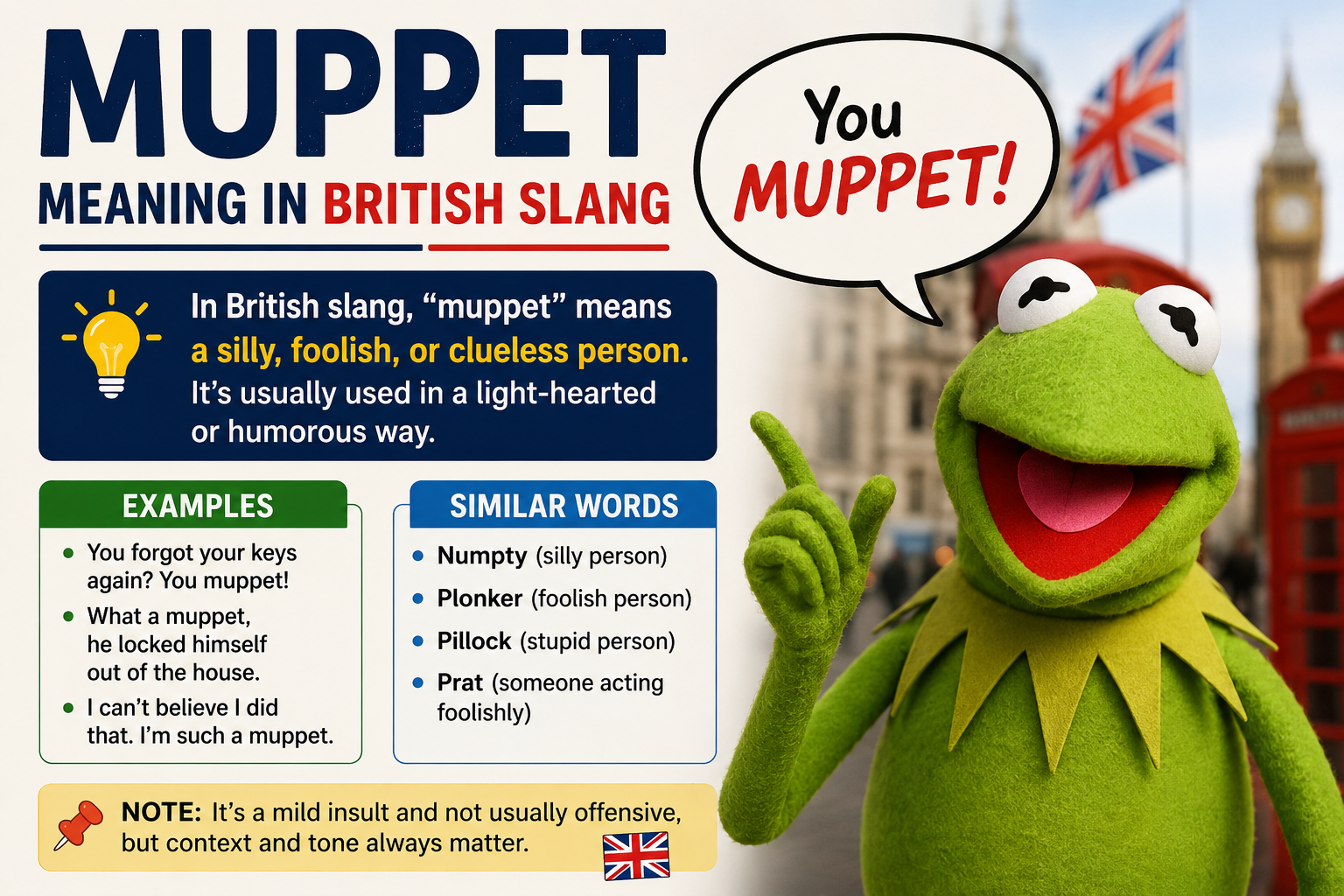
Muppet meaning British slang is a popular phrase used to understand how the word “muppet” is used in everyday UK language and conversations. In British slang, “muppet” refers to a foolish, silly, or clueless person, usually said in a humorous or light-hearted way rather than a deeply offensive insult. The term comes from the famous puppet characters created by Jim Henson, but over time it has taken on a completely different meaning in British English.
If you have ever watched British TV shows, listened to UK conversations, or browsed social media posts from Britain, you have likely seen someone being called a “muppet.” At first, it may sound strange or confusing, especially for non-native speakers. However, the meaning is actually simple and widely used in casual speech. In this article, we will explore what “muppet” means in British slang, its origin, how people use it in real life, and whether it is offensive or just playful humor.
What Does “Muppet” Mean in British Slang?
In British slang, the word “muppet” is used to describe someone who is acting foolish, careless, or not thinking properly. It is a mild insult that is often said in a joking tone rather than with real anger. Most of the time, it refers to small mistakes, silly behavior, or clumsy decisions.
For example, if someone forgets their phone at home or makes an obvious mistake at work, a friend might say, “You muppet!” The intention is usually not to hurt feelings but to highlight the silliness of the action.
Unlike stronger insults, “muppet” is widely considered soft and playful. That is why it is commonly used between friends, family members, and even coworkers in relaxed environments.
Origin of the Word “Muppet”
From Puppets to Popular Culture
The origin of the word comes from the famous “Muppets,” created by Jim Henson. These puppet characters, including Kermit the Frog and Miss Piggy, became globally popular through television shows and movies.
Originally, “Muppet” simply referred to these entertaining puppet characters. However, in British English, the word gradually evolved into slang used to describe a foolish person. The exact reason for this shift is not fully documented, but it likely comes from the idea that puppets can appear silly, clumsy, or controlled by others.
Over time, the slang meaning became more popular than the original reference in everyday speech.
How the Meaning Changed in the UK
In the UK, slang often develops through humor and social culture. “Muppet” became a funny and harmless way to call someone out for doing something stupid without sounding too harsh.
Instead of using offensive language, people started using “muppet” as a softer alternative. Today, many British speakers use it without even thinking about its puppet origin.
How “Muppet” Is Used in Everyday Conversation
Casual and Friendly Insults
One of the most common uses of “muppet” is in friendly teasing. It is often said when someone makes a silly mistake that is not serious.
For example:
- Forgetting keys or wallet
- Sending a message to the wrong person
- Missing something obvious
- Making a simple error at work or school
In these situations, calling someone a “muppet” is more playful than insulting. It can even create laughter instead of conflict.
Self-Deprecating Humor
Interestingly, British people also use “muppet” to describe themselves. If someone makes a mistake, they might say, “I’m such a muppet.”
This self-usage shows that the word is not always meant to insult others. Instead, it can be a way to laugh at your own mistakes and keep things light.
Online and Social Media Usage
On social media platforms, “muppet” is commonly used in comments and reactions. People use it to respond to funny fails, embarrassing moments, or obvious mistakes seen in videos or posts.
For example:
- “He really tried that? What a muppet.”
- “I can’t believe I did that… I’m a muppet.”
This shows how widely the term has spread in modern digital communication.
Is “Muppet” Offensive or Harmless?
Generally Mild and Playful
In most cases, “muppet” is considered a mild insult. It does not carry the same level of seriousness as stronger offensive words. Because of its humorous tone, it is often used among friends without causing offense.
Many people even find it funny rather than rude.
Context Matters
However, context is very important. If used in a serious argument or directed at a stranger in a rude tone, it can still sound disrespectful.
For example, calling your friend a muppet after a funny mistake is acceptable. But calling a stranger a muppet during a conflict might not be well received.
Tone of voice, facial expression, and relationship between speakers all influence how the word is understood.
Similar British Slang Words
British English is full of creative slang words that describe foolish behavior. Here are some similar terms:
Numpty
“Numpty” is another mild insult used to describe someone who is acting silly or not very smart. It is often used in a friendly or humorous way.
Plonker
“Plonker” is a classic British slang word made popular by TV comedy. It refers to someone who behaves foolishly or awkwardly.
Pillock
This word is slightly stronger than “muppet,” but still used in informal speech to describe someone acting stupidly.
Prat
“Prat” is another common term used when someone does something foolish or embarrassing.
All of these words share a similar tone, but “muppet” remains one of the most widely used because it sounds less harsh and more playful.
Why “Muppet” Became So Popular
Part of British Humor
British humor is known for being sarcastic, witty, and playful. Instead of using harsh insults, people often prefer funny and creative words. “Muppet” fits perfectly into this style of communication.
It allows people to express frustration or amusement without sounding aggressive.
Easy to Use and Remember
Another reason for its popularity is simplicity. The word is short, easy to pronounce, and instantly understood in context.
Even people who are not fluent in British slang can often guess its meaning from how it is used.
Widely Used in Media
British TV shows, comedy programs, and online content have also helped spread the word. As more people hear it in entertainment, it becomes part of everyday vocabulary.
Real-Life Examples of Usage
Here are some realistic examples of how the word appears in conversation:
- “You locked your keys inside again? You muppet.”
- “He wore mismatched shoes to work. What a muppet.”
- “I sent that email to the wrong person… I’m such a muppet.”
- “Don’t be a muppet, read the instructions properly.”
These examples show that the word is usually connected to small, silly mistakes rather than serious problems.
When You Should Avoid Using “Muppet”
Although it is mostly harmless, there are situations where you should be careful:
- Professional or formal settings
- Conversations with strangers
- Serious arguments or conflicts
- Cultural contexts where slang may not be understood
Using slang without understanding tone or relationship can sometimes lead to misunderstandings.
FAQ
Q: What does “muppet” mean in British slang?
It means a silly or foolish person, usually used in a light and humorous way rather than a serious insult.
Q: Is calling someone a muppet rude?
It depends on the situation. Among friends, it is usually playful. In formal or angry situations, it can sound rude.
Q: Why do British people say muppet?
They use it as a funny and mild insult to describe someone who has made a silly mistake or acted carelessly.
Q: Is muppet used in other countries?
Yes, it is also understood in places like Ireland, Australia, and New Zealand, but it is most common in the UK.
Q: Can I use muppet in daily conversation?
Yes, but only in informal settings where humor is appropriate and the other person understands the slang.
Conclusion
Understanding muppet meaning British slang helps you better interpret everyday UK conversations and humor. While the word originally comes from beloved puppet characters, it has evolved into a playful insult used to describe silly or foolish behavior. It is widely used in friendly teasing, casual speech, and online communication.
Although it can be mildly insulting, it is generally not offensive and is often said with humor rather than anger. Knowing how and when to use it can help you better understand British culture and slang. If you hear someone called a “muppet,” now you know they probably just made a funny mistake.