Introduction
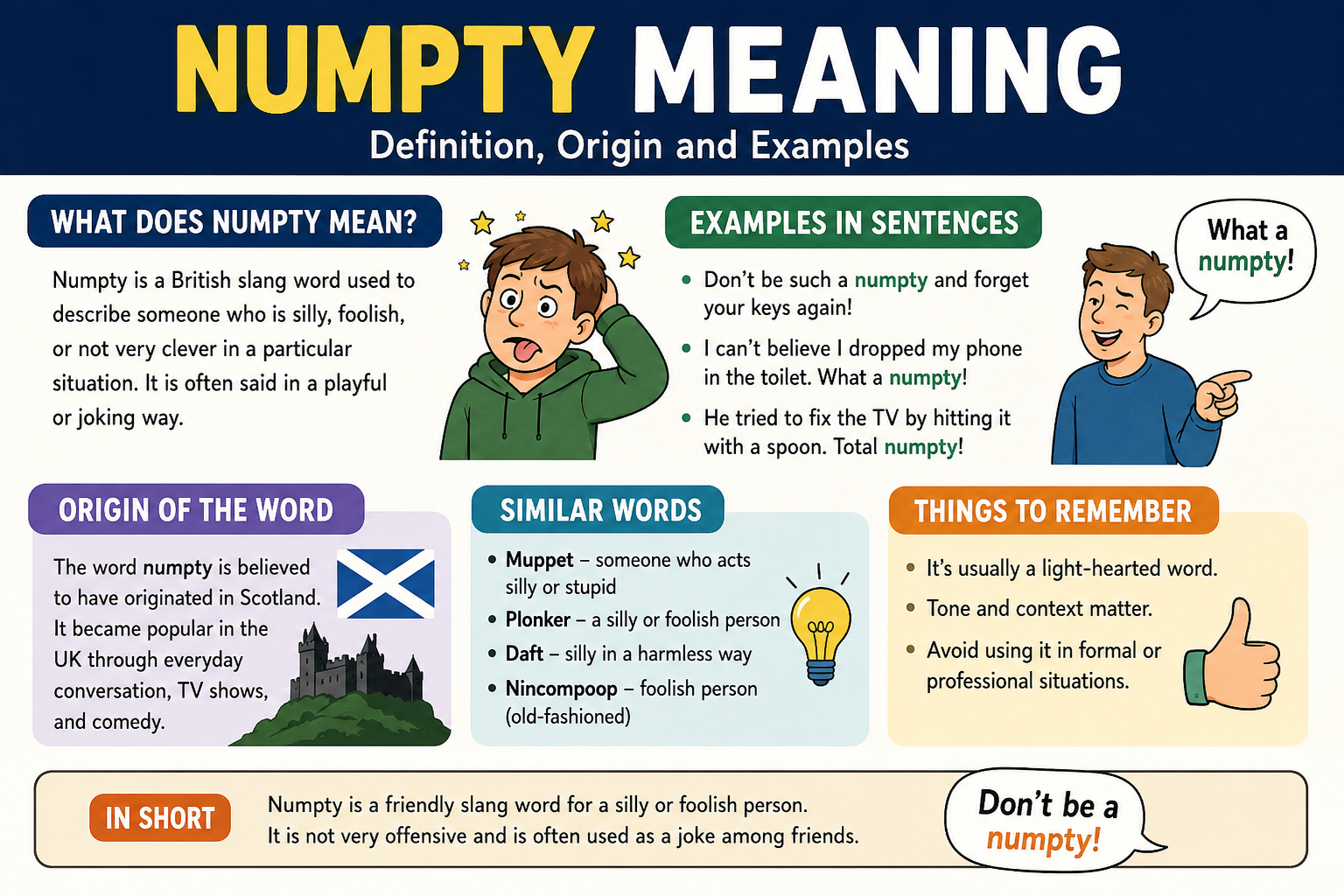
The phrase “numpty meaning” often pops up when people hear British or Scottish slang and want to understand what it actually refers to. In simple terms, a numpty is a light-hearted insult used to describe someone acting foolish, silly, or not thinking clearly in a situation. While it can sound harsh at first, it’s usually not meant to be deeply offensive. Instead, it’s often used jokingly among friends, especially in the UK.
In this article, we’ll break down the true numpty meaning, explore where the word comes from, and show how it’s used in everyday conversations. You’ll also see real examples, cultural context, and common questions people ask about this popular slang term.
What Does Numpty Mean in English Slang?
Basic definition of numpty
The numpty meaning in modern slang refers to a person who is acting a bit foolish, clumsy, or not thinking sensibly. It’s commonly used in British and Scottish English as a playful insult rather than a serious one.
Unlike stronger insults, “numpty” sits in a softer category. It’s often said with humor or mild frustration rather than anger. For example, if someone drops their phone twice in a row, a friend might jokingly say, “Don’t be a numpty.”
Is numpty offensive or friendly?
Whether “numpty” is offensive depends heavily on tone and context. In most casual settings, it’s friendly teasing. Among close friends or family, it can even be affectionate. However, if used in a formal or professional setting, it might sound disrespectful.
In general:
- Among friends → playful and harmless
- In arguments → mildly insulting
- In formal settings → inappropriate
So, the numpty meaning really shifts depending on how and where it is used.
Common traits of a “numpty”
When people use this word, they usually describe someone who:
- Makes silly mistakes
- Acts without thinking
- Misunderstands something obvious
- Behaves in a clumsy or awkward way
It’s not about intelligence in a serious sense. Instead, it highlights momentary foolish behavior.
Origin and History of the Word Numpty
Scottish roots and early usage
The word “numpty” is widely believed to have Scottish origins, though its exact linguistic history is not fully documented. It gained popularity in Scotland before spreading across the UK and eventually into global internet slang.
Originally, it was used informally to describe someone acting foolishly or incompetently in everyday situations. Over time, it became more mainstream, especially through television, comedy shows, and social media.
How TV and media spread the term
One of the key reasons the numpty meaning became widely recognized is its frequent use in British television and radio. Characters in sitcoms and presenters often used it as a humorous insult, helping it reach audiences beyond Scotland.
As UK comedy became more globally accessible, especially through online streaming platforms, words like “numpty” started appearing in international conversations as well.
Evolution into modern slang
Today, “numpty” is no longer limited to Scotland. It is used across the UK and even by English speakers worldwide who enjoy British slang. Its meaning has stayed fairly consistent, but its tone has softened over time.
In modern usage, it often replaces harsher insults, making conversations feel more playful and less aggressive.
How to Use “Numpty” in Real Conversations
Everyday examples of usage
Understanding the numpty meaning becomes easier when you see it in real sentences. Here are some common examples:
- “I locked my keys inside the car again. I’m such a numpty.”
- “Don’t be a numpty—read the instructions first.”
- “He tried to fix the Wi-Fi and unplugged the wrong cable. What a numpty!”
These examples show how the word is used in light, humorous situations rather than serious criticism.
Tone and intention matter
The way “numpty” is delivered completely changes its meaning. A laughing tone usually signals affection or teasing. A frustrated tone might suggest mild annoyance.
For instance:
- Friendly tone: “You spilled your tea again, numpty!” (joking)
- Annoyed tone: “Stop being a numpty and focus!” (warning)
- Neutral tone: Rarely used without emotion
So, understanding the context is key to interpreting the word correctly.
Situations where you should avoid it
Even though the word is mild, there are still places where using it is not appropriate:
- Job interviews or workplaces
- Formal writing or emails
- Conversations with strangers you don’t know well
- Sensitive emotional situations
In these cases, even a playful insult like “numpty” can be misunderstood.
Numpty in Modern Culture and Internet Slang
Popularity in online conversations
In the age of memes and social media, the numpty meaning has found a second life online. It is often used in comment sections, memes, and humorous posts to describe silly mistakes or funny fails.
People use it because it sounds less harsh than words like “idiot” or “fool,” making it perfect for humorous online interactions.
Comparison with similar slang words
“Numpty” belongs to a family of light insults used in British English. Some similar words include:
- “Muppet” (someone acting foolishly)
- “Plonker” (silly or clumsy person)
- “Daft” (silly or not smart in a moment)
- “Nincompoop” (old-fashioned term for foolish person)
Among these, “numpty” is one of the most modern and widely used in casual speech.
Why people like using the word numpty
Part of the charm of “numpty” is its sound and softness. It doesn’t feel aggressive, and it often makes situations feel more humorous rather than tense. That’s why it continues to stay popular in both spoken and online English.
Common Misunderstandings About Numpty
Is numpty a serious insult?
Many learners of English assume “numpty” is offensive. However, the numpty meaning is generally mild. It is closer to calling someone silly rather than insulting their intelligence in a harsh way.
That said, tone matters. Used incorrectly, it can still offend someone.
Is numpty only used in Scotland?
While it originated in Scotland, the word is now used throughout the UK and beyond. You might hear it in England, Ireland, and even among English speakers on the internet who enjoy British slang.
Does numpty mean stupid?
Not exactly. “Stupid” is stronger and more direct. “Numpty” usually refers to a temporary silly action rather than a fixed trait. It’s more about behavior than intelligence.
FAQs About Numpty Meaning
Q: What does numpty mean in simple words?
A: “Numpty” means a silly or foolish person, usually used in a playful or joking way. It is not a serious insult and is often used among friends to tease someone for making a small mistake.
Q: Is numpty a rude word?
A: It can be mildly rude depending on tone, but most of the time it is friendly slang. In casual conversation, it is usually meant humorously rather than offensively, especially in UK English.
Q: Where does the word numpty come from?
A: The word is believed to have Scottish origins and became popular through everyday speech and media. Over time, it spread across the UK and is now widely recognized in informal English.
Q: Can I use numpty in formal writing?
A: No, it is not suitable for formal writing, business communication, or professional settings. It is best used in casual conversations, jokes, or informal online discussions.
Q: What is the difference between numpty and idiot?
A: “Idiot” is a stronger and more offensive term, while “numpty” is light-hearted and often affectionate. Numpty usually refers to a small mistake or silly action, not a person’s overall intelligence.
Conclusion
Understanding the numpty meaning gives you a fun glimpse into British and Scottish slang culture. It’s a light, humorous word used to describe silly behavior rather than serious stupidity. While it originated in Scotland, it has become widely used in casual English conversations and online spaces.
The key to using “numpty” correctly lies in tone and context—it’s playful among friends but unsuitable in formal situations. As slang continues to evolve, words like this show how language can be both expressive and entertaining.
If you enjoy learning British slang, “numpty” is a great example of how a simple word can carry humor, culture, and personality all at once.